The Tenderness of Everyday Life in Jessie Redmon Fauset’s Novels
I spent the summer with a Jessie Redmon Fauset book tucked in my bag: on picnics, on flights across oceans, on lazy afternoons on my couch, in cafés, and at solo dinners.
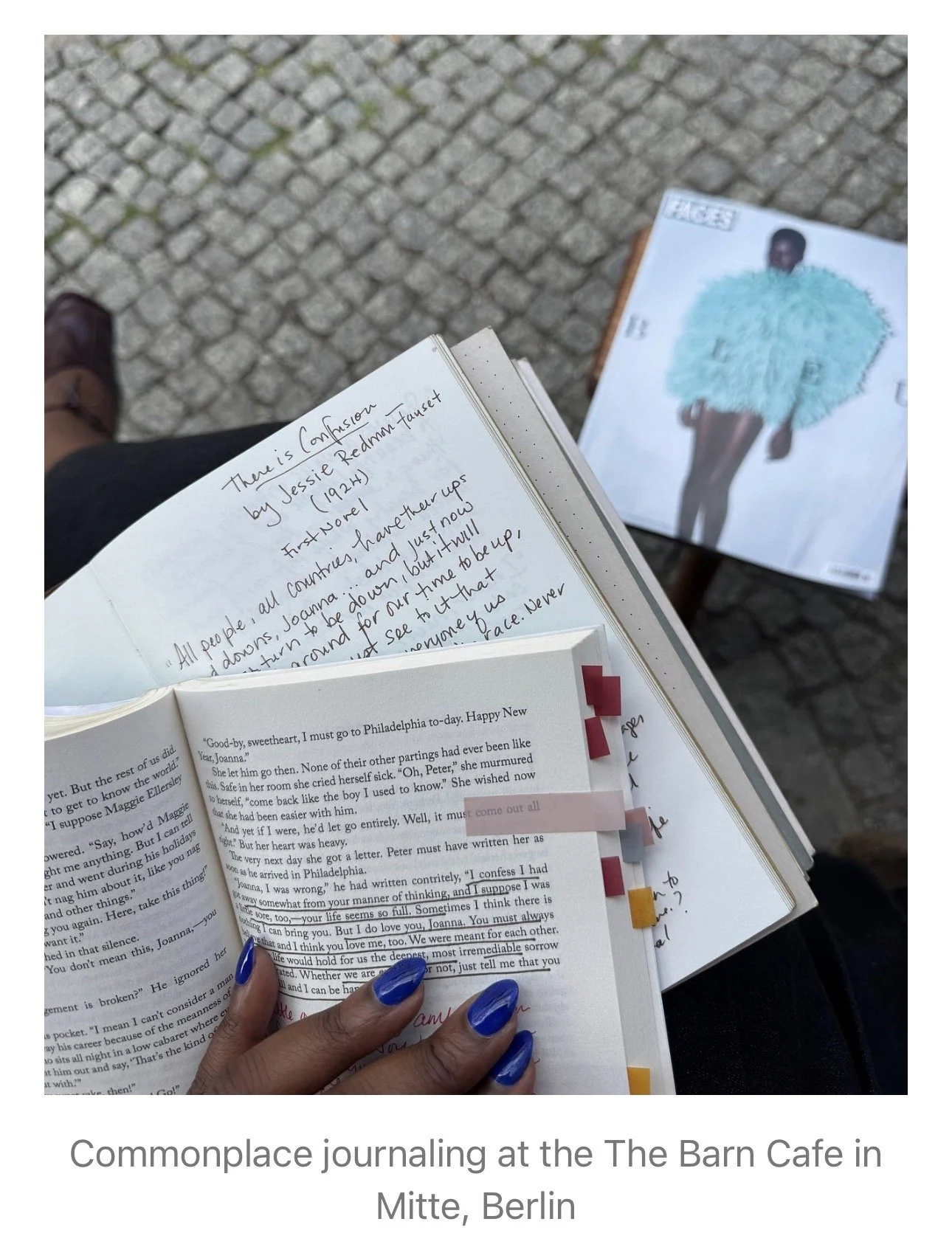
I ended up reading her entire body of work, and it left me feeling as though I’d been let in on a little secret: that there was a brilliant, lesser-known writer whose work is absolutely divine and wrote tenderly about Black domestic life in the 1920s.
In a digital world that constantly references Toni Morrison or James Baldwin, and deservedly so, I want the world to also know Jessie Redmon Fauset, a literary elder to them both, whose work deserves to be read, celebrated, and remembered.
So, I am here to campaign for Fauset.
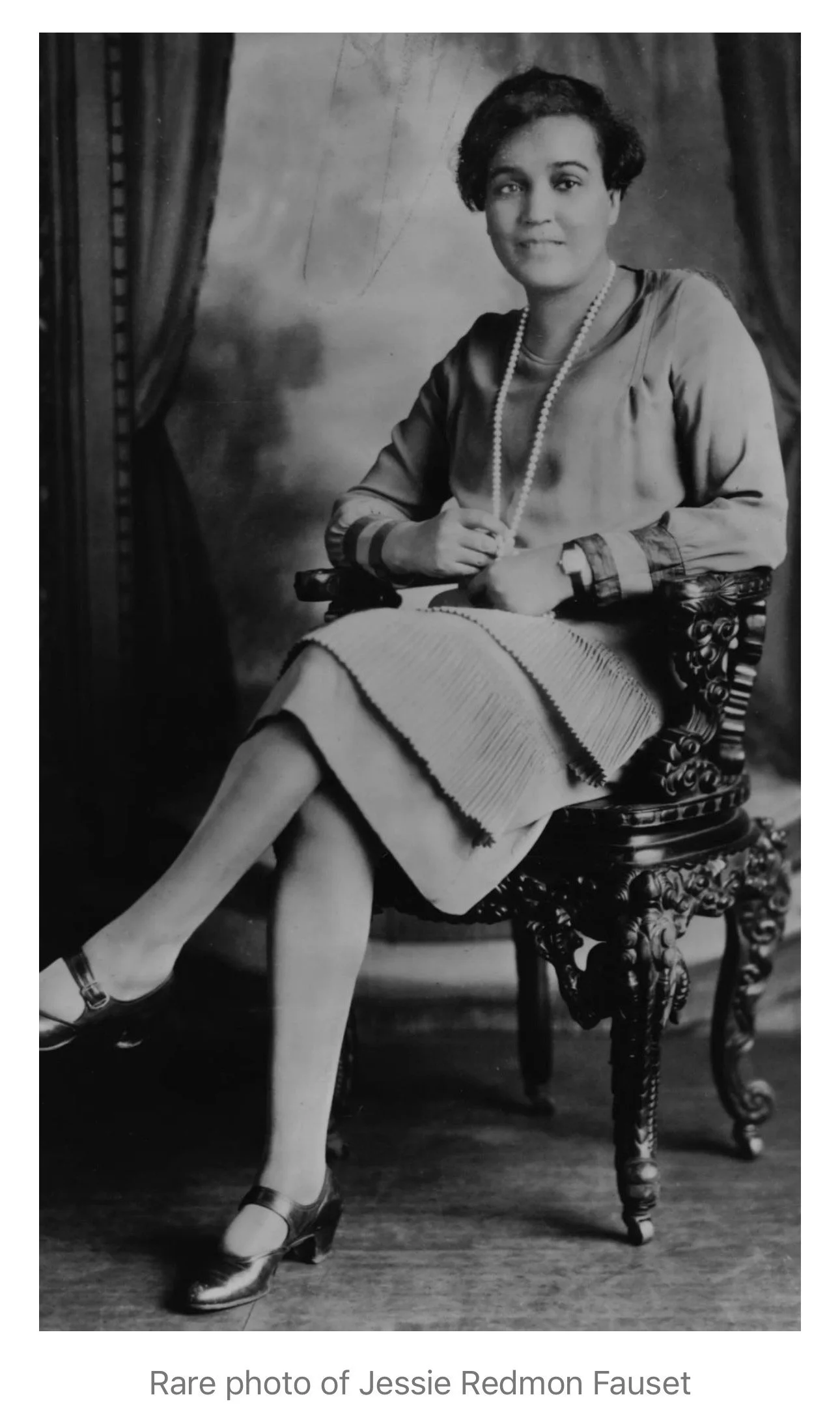
Born in 1882 in New Jersey, Fauset, in the 1920s was the literary editor of The Crisis, the NAACP magazine founded by W.E.B. Du Bois.
Through The Crisis, Fauset helped midwife the Harlem Renaissance, championing and editing the works of writers and artists such as Langston Hughes, Jean Toomer, Countee Cullen, and Aaron Douglas.
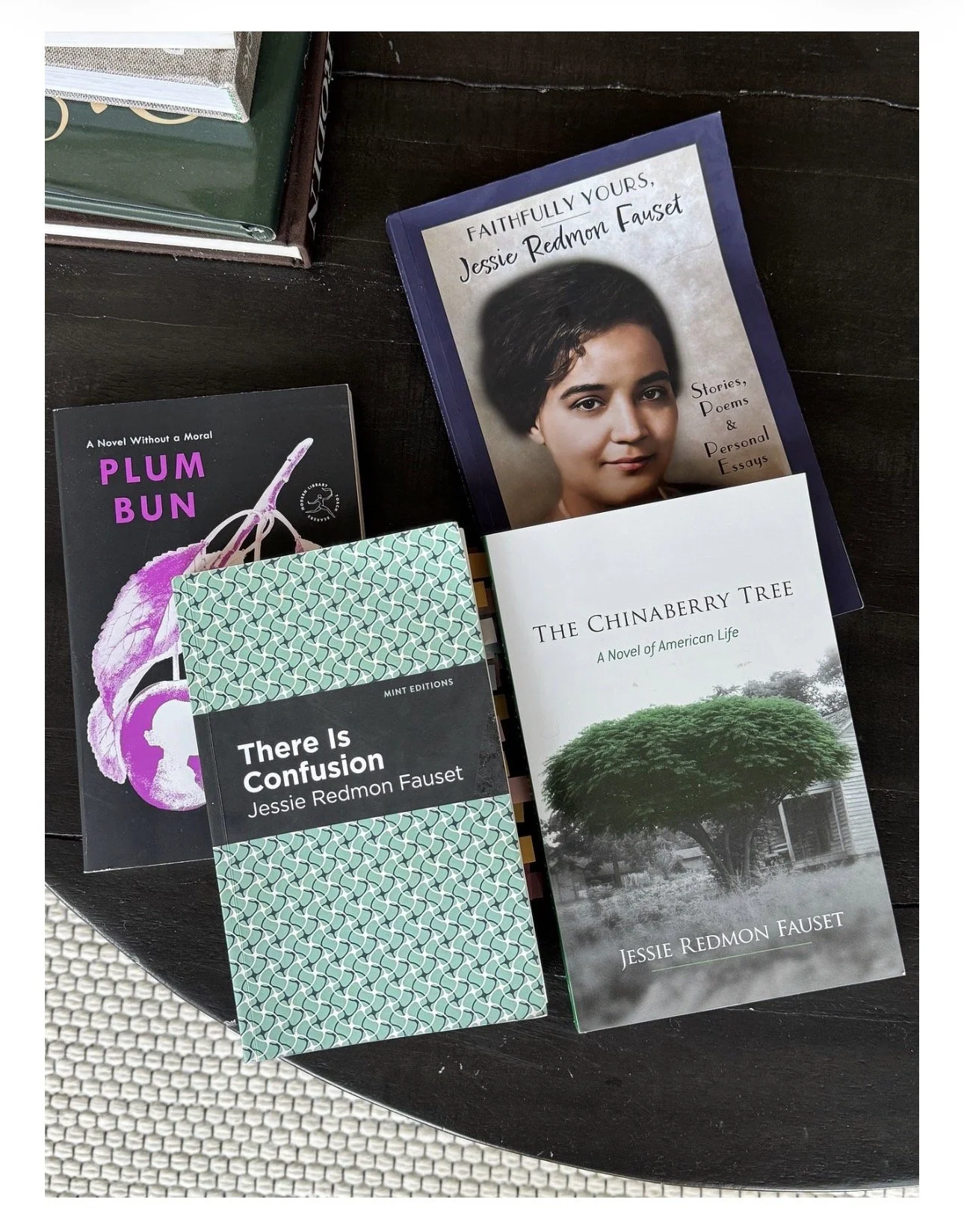
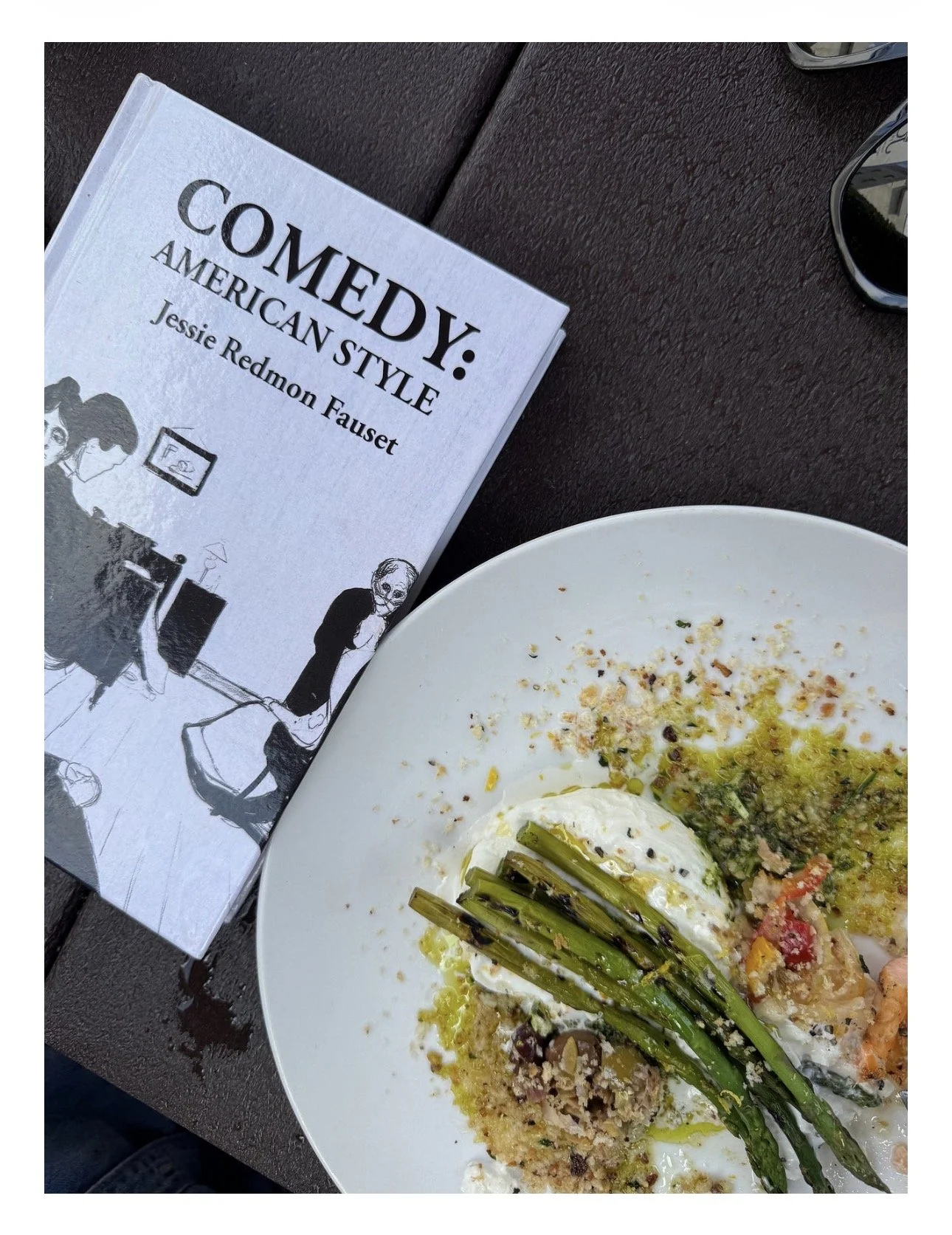
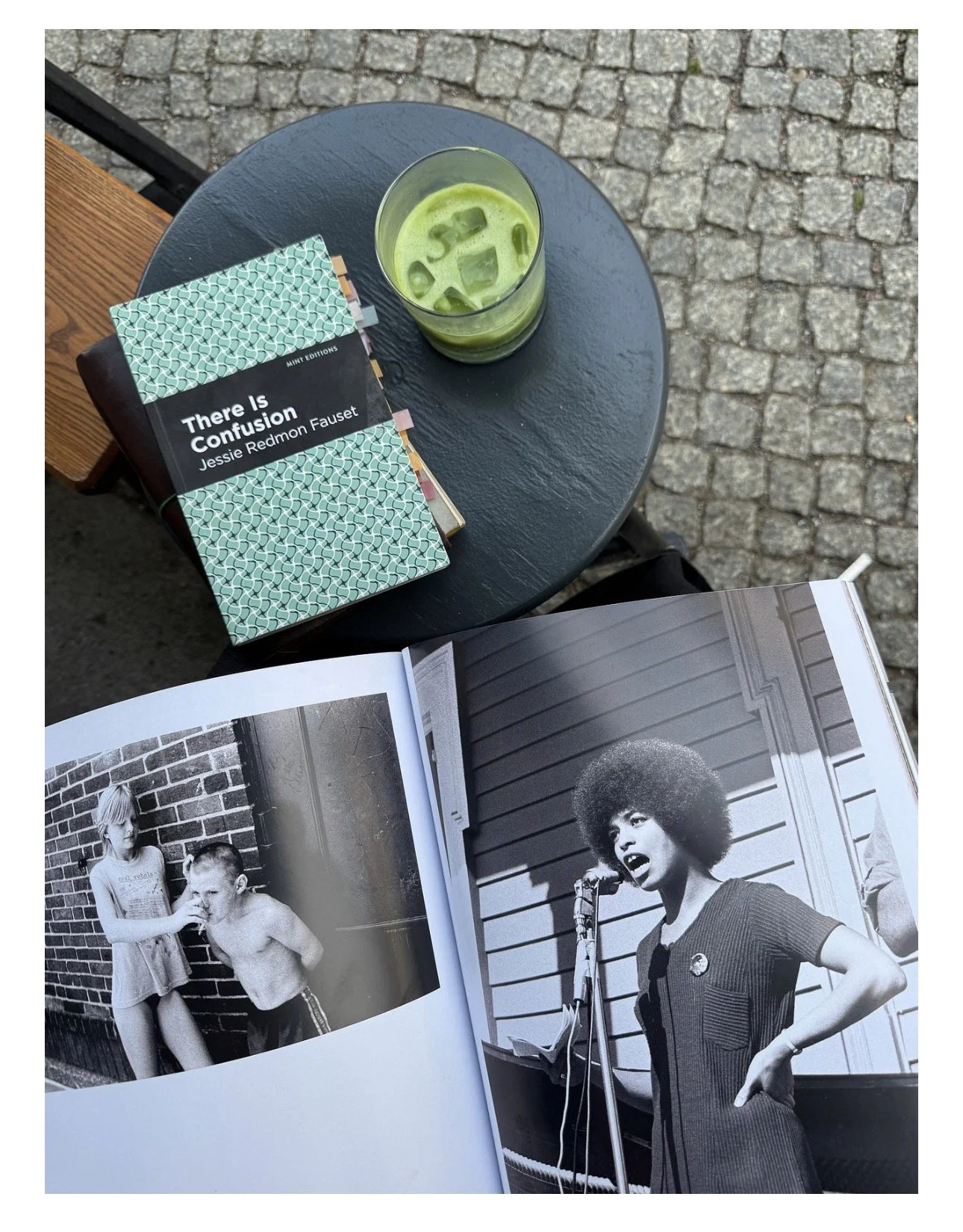
Fauset wrote four novels, which I read in order: There Is Confusion (1924), Plum Bun (1928), The Chinaberry Tree (1931), and Comedy: American Style (1933). I also read all of her short stories and poetry.
What struck me most is how much tenderness and beauty are in her work. Fauset takes time to render ordinary daily beauty: the mood of afternoon tea, the feel of a Sunday morning at home, the way morning light plays on the walls. Her characters face hardship, but their lives are not completely consumed by it.
Rather than summarize her plots, I’ll leave those for you to discover. They’re engaging and well worth reading, but what I enjoyed most about her work isn’t what happened in her books. It’s what she believed to be true.
A few months after finishing a novel, I may not remember who married whom or how the conflict resolved, but I remember how the author saw the world.
This is true of Fauset. You can see her values and convictions throughout her writings.
There are four lessons/convictions from Fauset’s canon that stood out for me:
Lesson/Conviction One: The Family As Sanctuary, Not Site of Trauma
A while back, someone shared a note on Substack asking, more or less, “Can you name any Black literature that isn’t mostly centered on trauma and wounds?” I thought hard about it and couldn’t come up with many books I’d read that weren’t. After reading Jessie Redmon Fauset’s novels, I can now confidently say yes: there are several that don’t center trauma from beginning to end.
Fauset does touch on the harsh realities of Black American life in the 1920s, but she doesn’t make them the whole story.
The families in her books are loving, kind, and solid. The parents are partners in love, with their own intellectual achievements and emotional lives. They married for love, still enjoy each other’s company, and love each other so deeply that in Plum Bun, the mother no longer wants to live after her husband suddenly dies. She doesn’t even try to hold on for her children; her love for him is that strong. Here, Fauset posits that romantic, tender, all-consuming love is part and parcel of Black love stories.
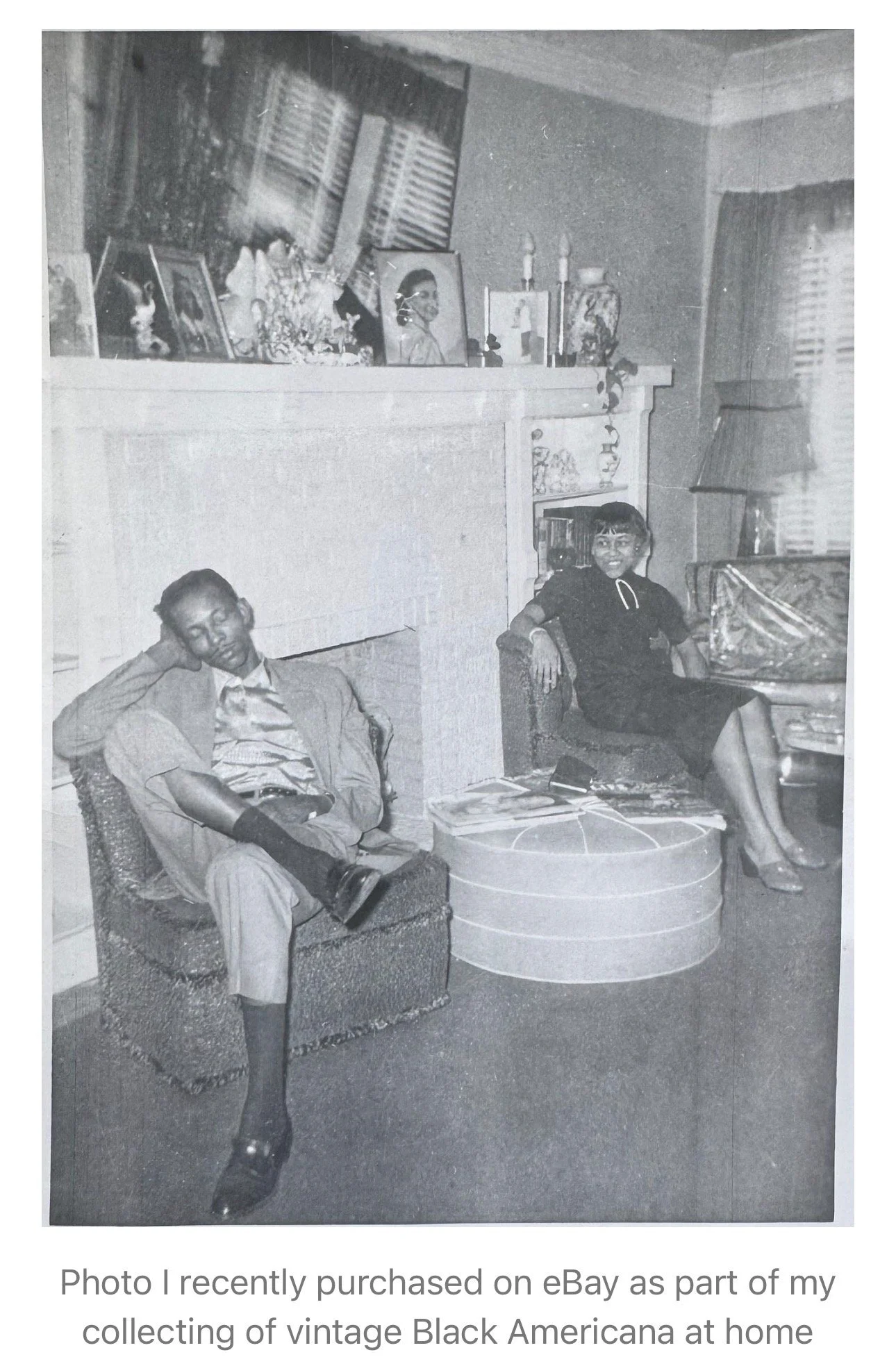
The children in Fauset’s novels aren’t raised in generational pain. Instead, they’re given attention by present, involved, encouraging parents.
Fauset was writing at a time when the literary world was eager to consume a certain otherness about the Black family. Yet she depicted stable, affectionate households, which reflected the reality of some Black homes at the time.
In Fauset’s own words as she was discussing her novel, The Chinaberry Tree, she said,
“In the story of Aunt Sal, Laurentine, Melissa and the Chinaberry tree, I have depicted something of the home life of the colored American who is not being pressed too hard by the Furies of Prejudice, Ignorance and Economic Injustice.”
Here Fauset reveals her conviction to depict a slow, loving, nature filled home life despite societal challenges. The Chinaberry Tree was by far my favorite book of Fauset’s.
Zona Gale wrote the first edition introduction of the Chinaberry Tree in 1931. She wrote the following in the intro:
“It seems strange to affirm, - as news for many, - that there is in America a great group of Negroes of education and substance who are living lives of quiet interests and pursuits…that these men and women carry on their lives, educate their children, and fill their times with interests social, domestic, and philanthropic.”
While reading Fauset, I thought about my own childhood home life. Of course there were some unintentional wounds, but for the most part I grew up in a gentle household. My mom is naturally soft-spoken and affectionate. The kind of mom who preferred to knit and crochet and woke us up singing and humming on Sunday mornings. I was allowed to speak my mind at home, encouraged to pursue an array of hobbies and my home life was stable and secure.
One of my earliest childhood memories of my dad is of him sitting in our parlor, smoking a cigarette, telling his professor colleagues that I was the toughest, smartest little thing he had ever seen. I was about five years old, so this would have been around 1982. He continued to affirm that belief in me for the rest of his life, and it left an indelible mark on the woman I would become: confident, ambitious, and sure of my own abilities.
So when the media and books I consumed seemed to assume that all Black homes held only trauma and violence, I just couldn’t relate.
I found the tenderness in Fauset’s books so rare that I researched how Fauset’s work was received during the 1920s and 30s. I learned that some critics called her an apologist or a traditionalist, accusing her of trying to convince white readers that Black life was just like theirs. I find it heartbreaking that her portrayals were dismissed as fluff. Two things can be true at once: some families are unhappy and unsafe, and some are happy and safe.
Much of what I’ve read suggests this is why Fauset is forgotten when discussing the Harlem Renaissance even though she literally had a hand in organizing the movement.
She is rarely discussed alongside the more well-known Zora Neale Hurston, whose major novels came a little later. Many readers see Hurston’s work as the more “authentic” Black experience and Fauset’s as less so. It’s true that Hurston often wrote from a rural, working-class perspective and Fauset from the Black middle class. But again, two things can be true, and both belong to the full continuum of Black experience.
Fauset’s words on writing about the in-between tender moments of home life without centering “the problem” of race:
“But of course there are breathing-spells, in-between spaces where colored men and women work and love and go their ways with no thought of the “problem.” What are they like then?…So few of the other Americans know.
Lesson/Conviction Two: The Ordinary Is Beautiful, and It's Part of the Harlem Renaissance Story Too
Throughout her novels and short stories, Fauset shows us the beauty of slowing down: unhurried conversations with friends, leisurely Sunday mornings with family, playing the piano with your family and everyone singing along, the ritual of breakfast before church, noticing the particular quality of Sunday morning light.
“She loved the atmosphere of golden sanctity, which seemed to hover sweet glory about the stodgy, shabby dwelling. ..she came down first so as to enjoy by herself this blessed Sunday feeling.” (Pg. 11, Plum Bun)
“Angela liked her house with its simple elegance, its fine, soft curtains and steady, shaded glow of light that stood somehow for home.” (Pg 83, Plum Bun)
“In summer the place was lush with roses. Gladiolas flamed in the fall and prim, hard, self-reliant asters. There was a grape arbor and a vine with giant roots. And someone had placed a swing on the back lawn. But what the three women loved most in that most lovely of places was the Chinaberry Tree.” (Ch 1, The Chinaberry Tree)
Her characters linger and aren’t always being productive. They have lively conversations with friends who stop by for afternoon tea. They pause to reflect on their inner lives. Fauset gives Black domestic life the same care that some people might think belongs only to the novels of Austen and the Brontës.
Lesson/Conviction Three: An Artistic Career Is a Legitimate Aspiration
Fauset’s novels follow her main characters between roughly sixteen and twenty-five, the years when you stop being only your parents’ child and start finding your own way. Her characters talk about their dreams for the future, pine for love, make mistakes, and wrestle with society’s limits, racial pride and injustices, whether in their parlors or out at the theater.
Their parents don’t push them toward “safe” professions. Instead, they encourage them to become dancers, musicians, painters, and writers. Fauset is convinced that an artistic life is a flourishing life: a legitimate vocation that a loving family can be proud of and support wholeheartedly. And she doesn’t present this in a Pollyanna sort of way. In her world, it’s just a natural choice available to people of color.
Lesson/Conviction Four: Happy Endings Are Okay
Most of Fauset’s novels end well, and critics have sometimes held that against her, dismissing her as too genteel and not confrontational enough. I think they miss what she was trying to do. Black Americans in the 1920s faced no shortage of trauma, and Fauset knew it.
She wanted to show that joy is available to us too, and that suffering isn’t the only story worth telling. Her endings aren't hokey; they're matter-of-fact. She casually claims joy and hope as run of the mill in all her books.
This is the last sentence in her book The Chinaberry Tree when everything in the plot is resolved. She uses this analogy of being rescued and restored because restoration and equilibrium was more important to her than a crash and burn storyline.
“Rather like spent swimmers, who had given up the hope of rescue and then had suddenly met with it, they were sensing with all their being, the feel of the solid ground beneath their feet, the grateful monotony of the skies above their head,…and everywhere about them the immanence of God…The Chinaberry Tree became a Temple.”
Why I Connected With Fauset
Fauset was part of a yearlong personal curriculum I’ve been doing of the Harlem Renaissance. Before her, in the spring, I’d read Claude McKay, W.E.B. Du Bois, Nella Larsen, and Wallace Thurman, and each of them showed me a different side of that era. But of everyone I’ve read so far, Fauset is the one I connected with most.
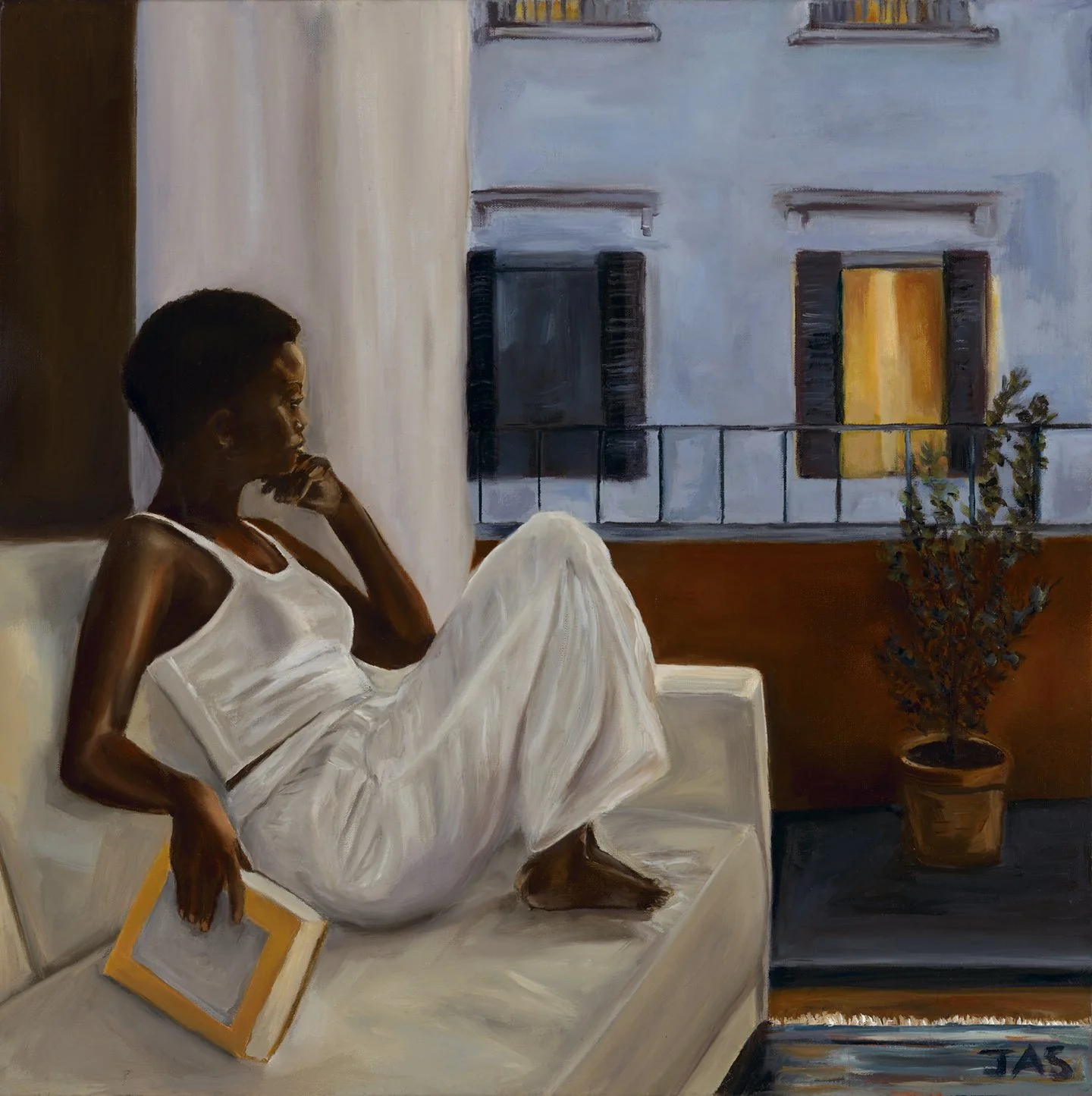
Fauset knew what she marveled at, and she never shied away from it, even when critics wanted something grittier from her. That taught me to be just as insistent about what I marvel at in life and in my art practice: the in-between moments, the sacred pause, a thinking life, a lovely curated home, reading, studying, learning, flowers, how light hits my walls, my rituals around tea-making, preparing food, travel, the beauty in the turning of seasons.
These things show up in my paintings. These things feel small. But they’re what I strongly believe makes a well-lived, thoughtful life.
“We must learn to look for life first, then color and limitations. My being colored didn’t make me forget to provide myself food and raiment.” (Pg. 215, There is Confusion)
I think that’s the little secret I felt let in on this summer. Fauset wrote for the woman who notices ordinary things and is clear about what matters to her.
If there's anything I hope you take from my discovery of Fauset, it's an invitation to go looking for the books that rarely make the reading lists. Hers is a nourishing voice I could have missed entirely if I hadn't set out to read every writer of the Harlem Renaissance and discover for myself whose work resonated.
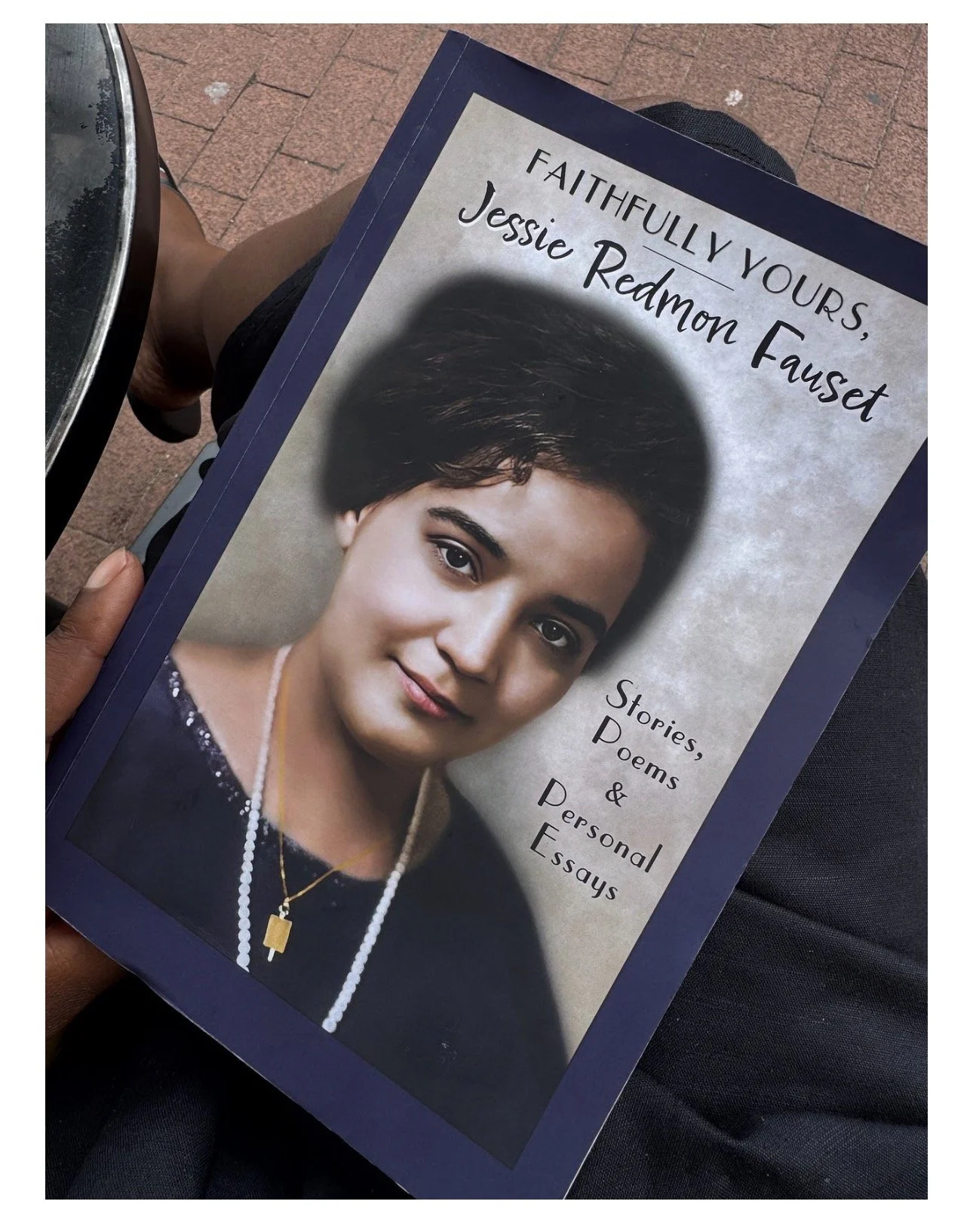
Oh, and if you’re wondering where to start with Fauset, I’d recommend her collection of short stories, pictured above. I’d also encourage you to read her novels in order of publication. As for my favorites, I loved every one of her books, but if I had to rank them, here’s how they’d fall.
The Chinaberry Tree
Plum Bun
Faithfully Yours, Short Stories and Poetry
There is Confusion
Comedy, American Style