Standing in Front of a Rothko and Reverence
I saw the Mark Rothko retrospective in Florence, Italy, last month, and I’ve been wanting to write about the experience. But I kept telling myself I needed to do more research on his background so I could be more versed on his art and biography before coming to you with my thoughts.
Then I remembered how moving my experience was. It wasn’t a cerebral experience, so why was I approaching the essay in such an academic, term paper way? What if I just reflected and wrote about how it felt instead of trying to lecture or educate or be productive somehow?
So I’m squelching that approach and simply sharing my embodied experience. This is also why I only write about art I’ve seen in person, never from a photograph or someone else’s description. I want my own sensibility to meet the work first, before anyone else’s account of it influences me.
The first time I saw a Rothko painting, I wasn’t looking for one. I was at the Phillips Collection in DC to see a Joan Mitchell painting. After seeing the exhibit, I noticed a back room with low, moody lighting. It reminded me more of a yoga or meditation studio than a museum.
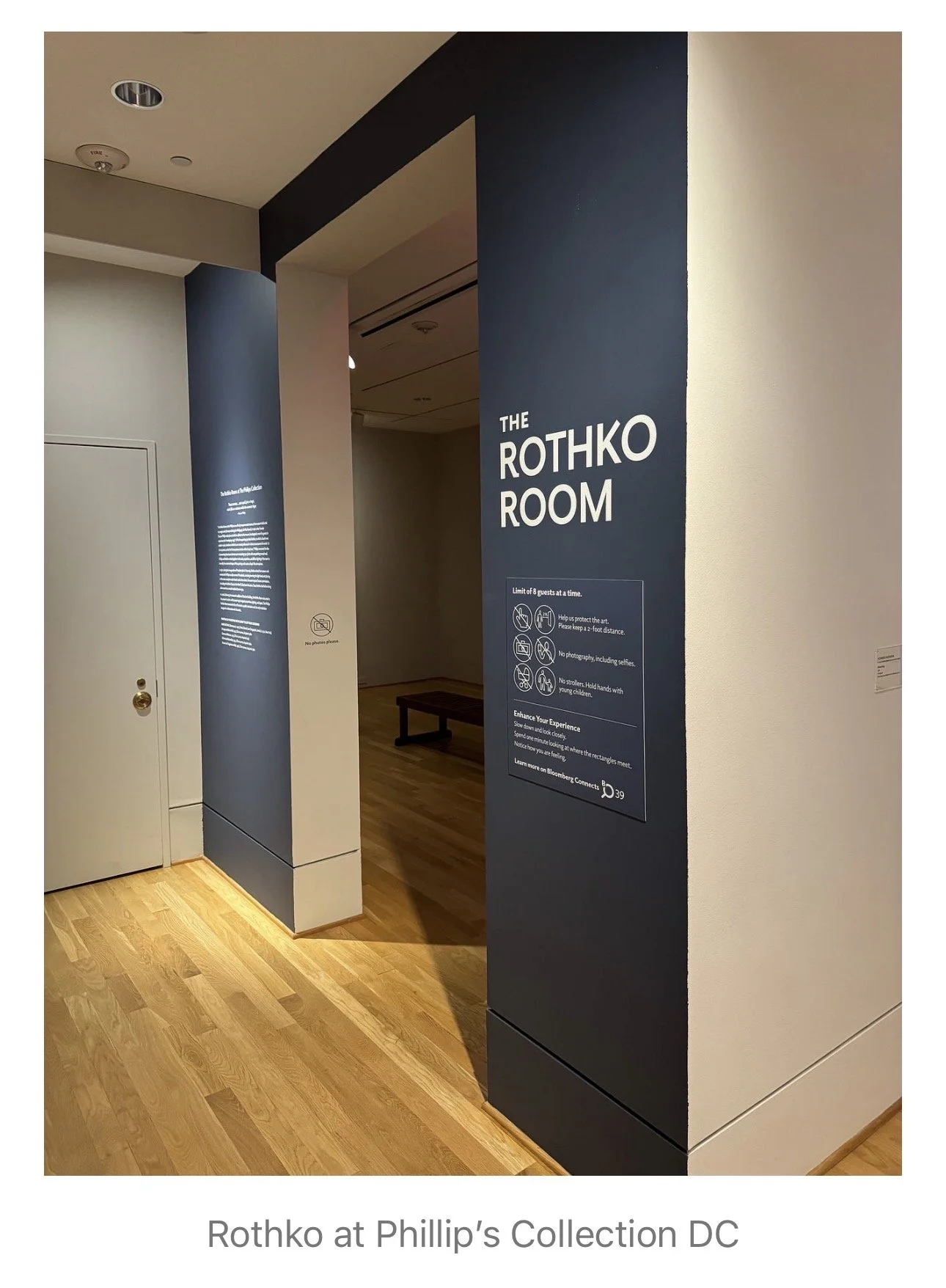
Stepping into the room, I came face to face with a Rothko. Everything seemed to go silent around me. I felt a sense of reverence, the same feeling you get stepping into a cathedral or a very quiet library. An immediate sense that I was in a special place for contemplation and thinking.
The painting was simple enough, a block of abstract colors. But somehow, it made me feel a mix of emotions — sadness, loss, contentment, melancholy, and gratitude — all at the same time. I was surprised by how many emotions it got out of me.
I got a second chance to see if my first Rothko experience was just a fluke.
It wasn’t.
I got to see one of his major retrospectives in Florence, Italy last month, a show spread across several locations throughout the city.
Until seeing this exhibition, I had no idea Rothko intentionally wanted his art shown in a specific way: in dim lighting, hung low enough for the viewer to feel swallowed by it, in an atmosphere that felt almost like a church or cathedral.
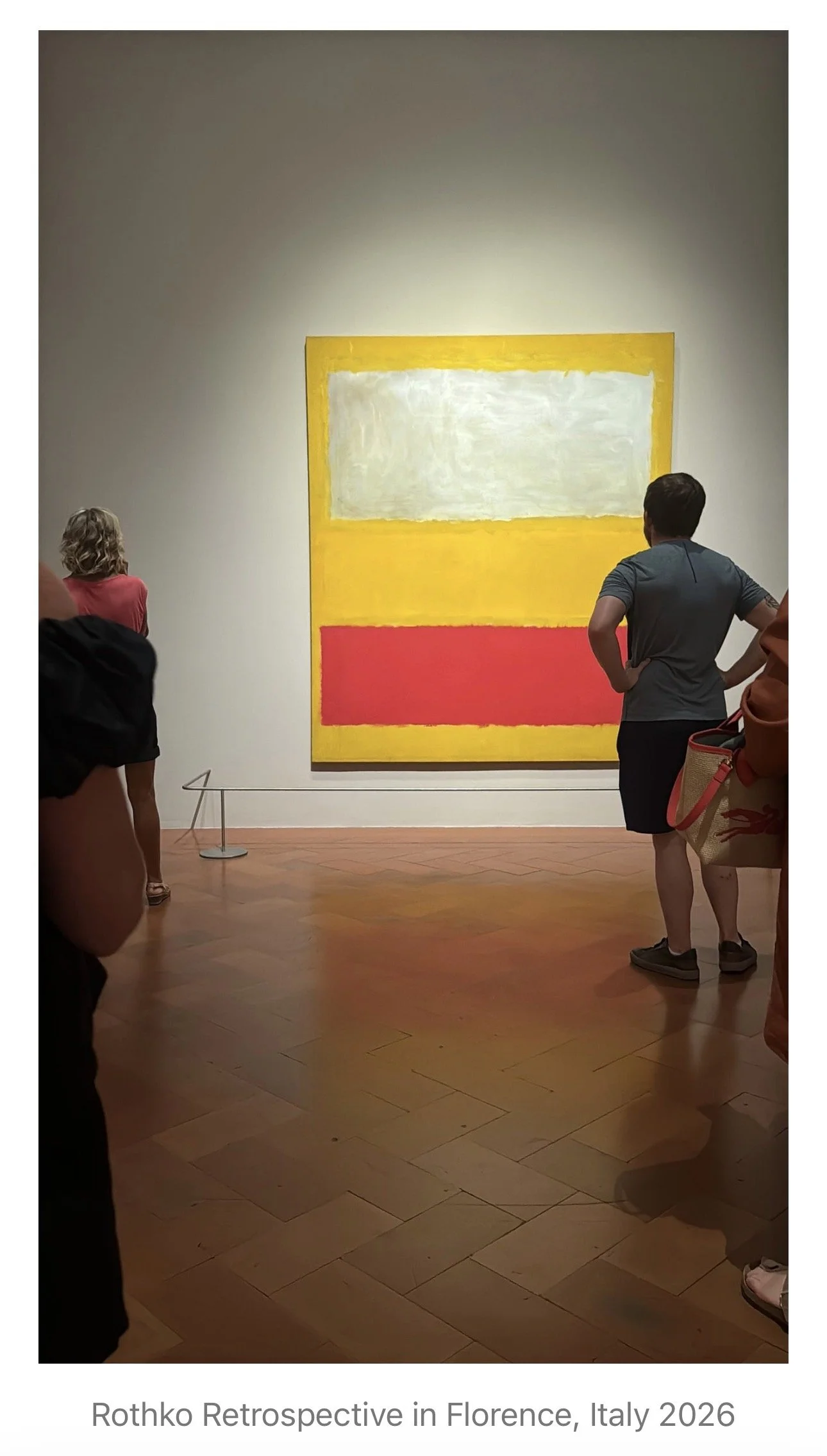
Before I knew anything about how he wanted his paintings displayed, I had responded to them exactly as he intended. I felt reverence.
I felt enveloped and surrounded by it, as if everything else didn’t matter, just being here with his work. I know there’s a risk of hyperbole, of being one of those people who goes on and on about a poem or film no one else thinks is all that.
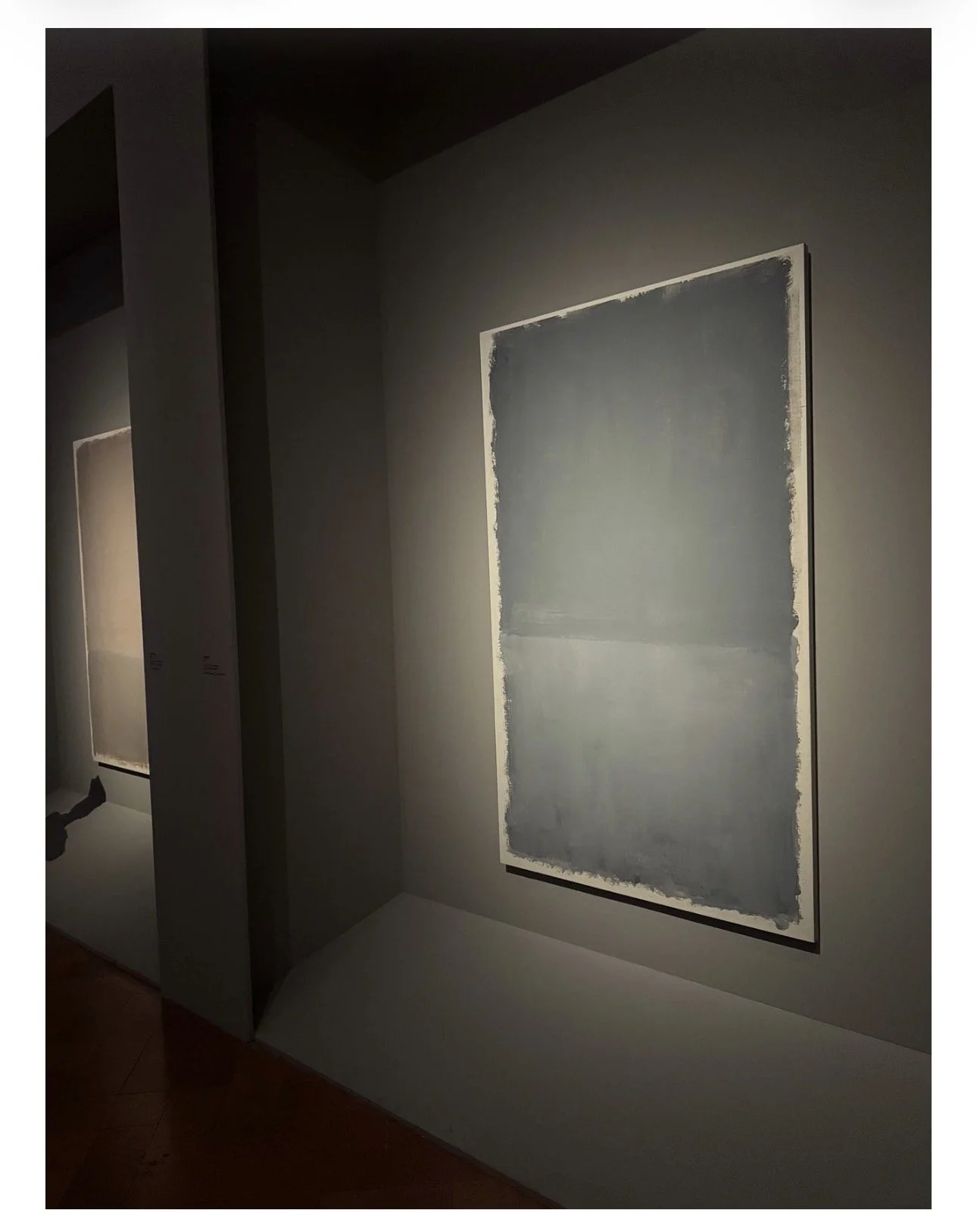
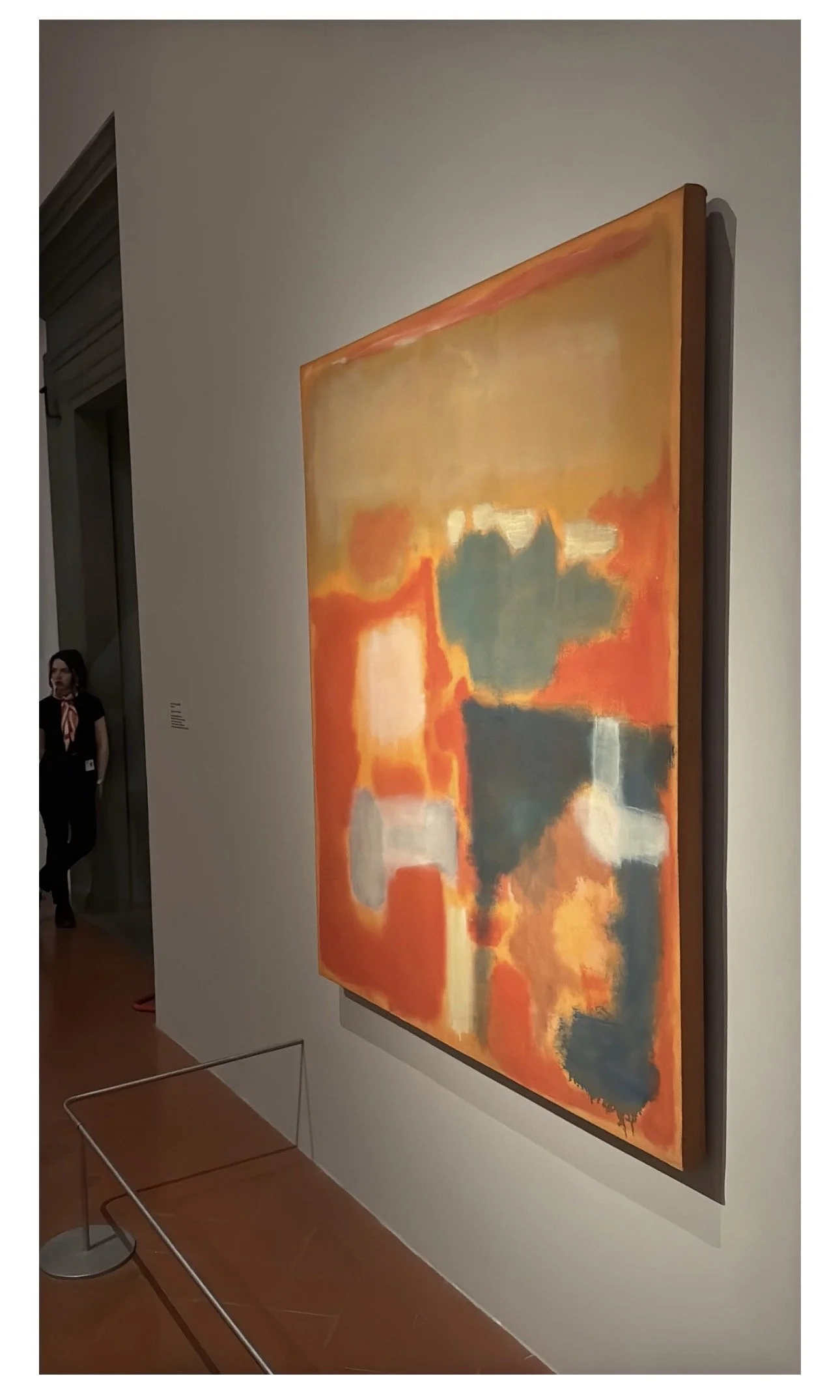
But I can’t help trying to convince you: it’s special. Seeing Rothko’s works in Florence reminded me of the times I’ve slipped into an empty church or cathedral in the middle of the day, just to sit, feel the prayers still hanging in the air, light a candle, and toss a coin in the donation bin.
One of the exhibits that leaned even more into this feeling for me was at San Marco, where Rothko’s paintings were paired with Christian frescoes inside a former Dominican friars’ dormitory.
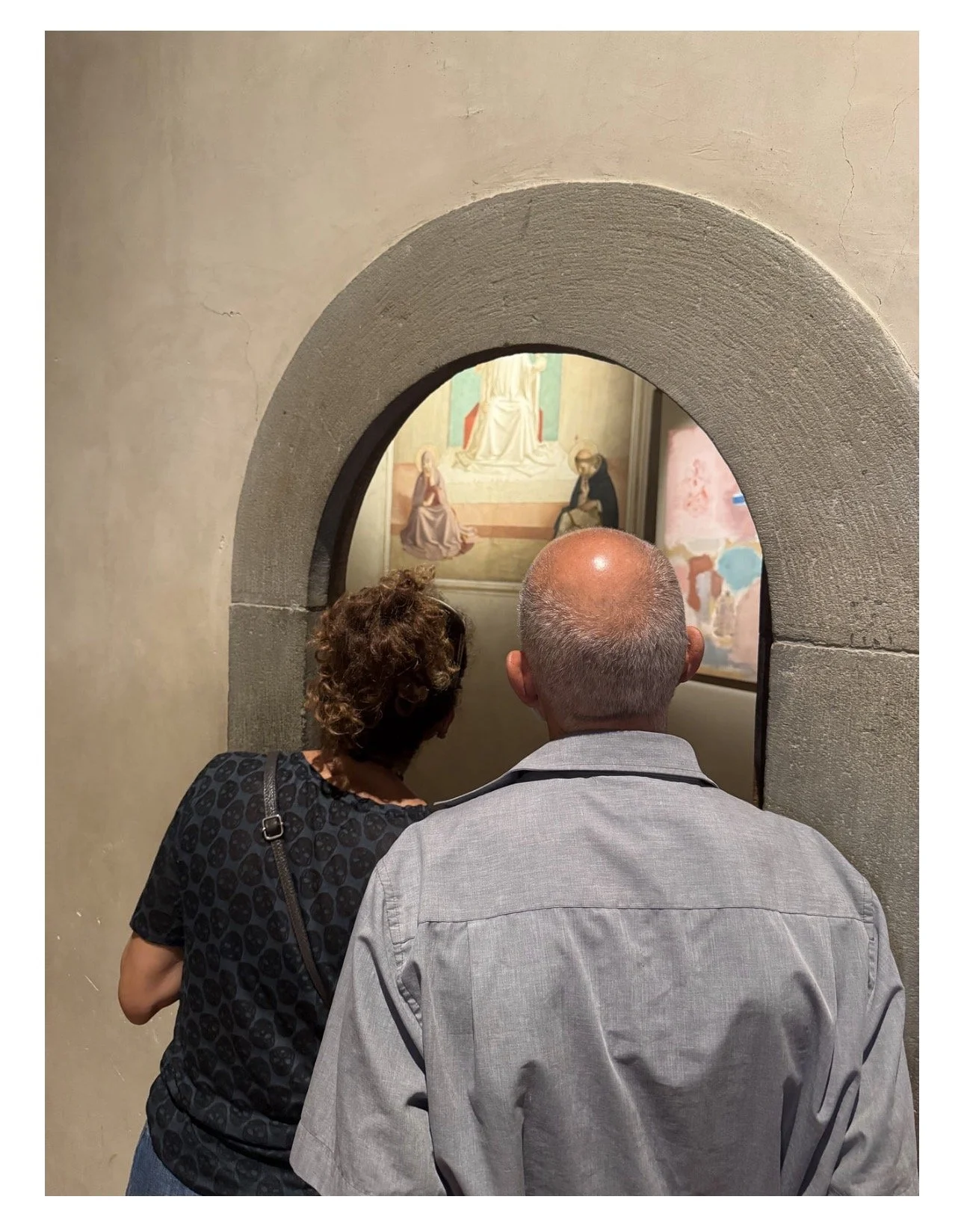
Each small dormitory cell held a single fresco, originally meant for one friar’s meditation practice, alongside one of Rothko’s works. The cells were closed off, so you had to stand at the doorway and peer in. It made me feel like I was intruding on someone’s prayer rather than viewing art.
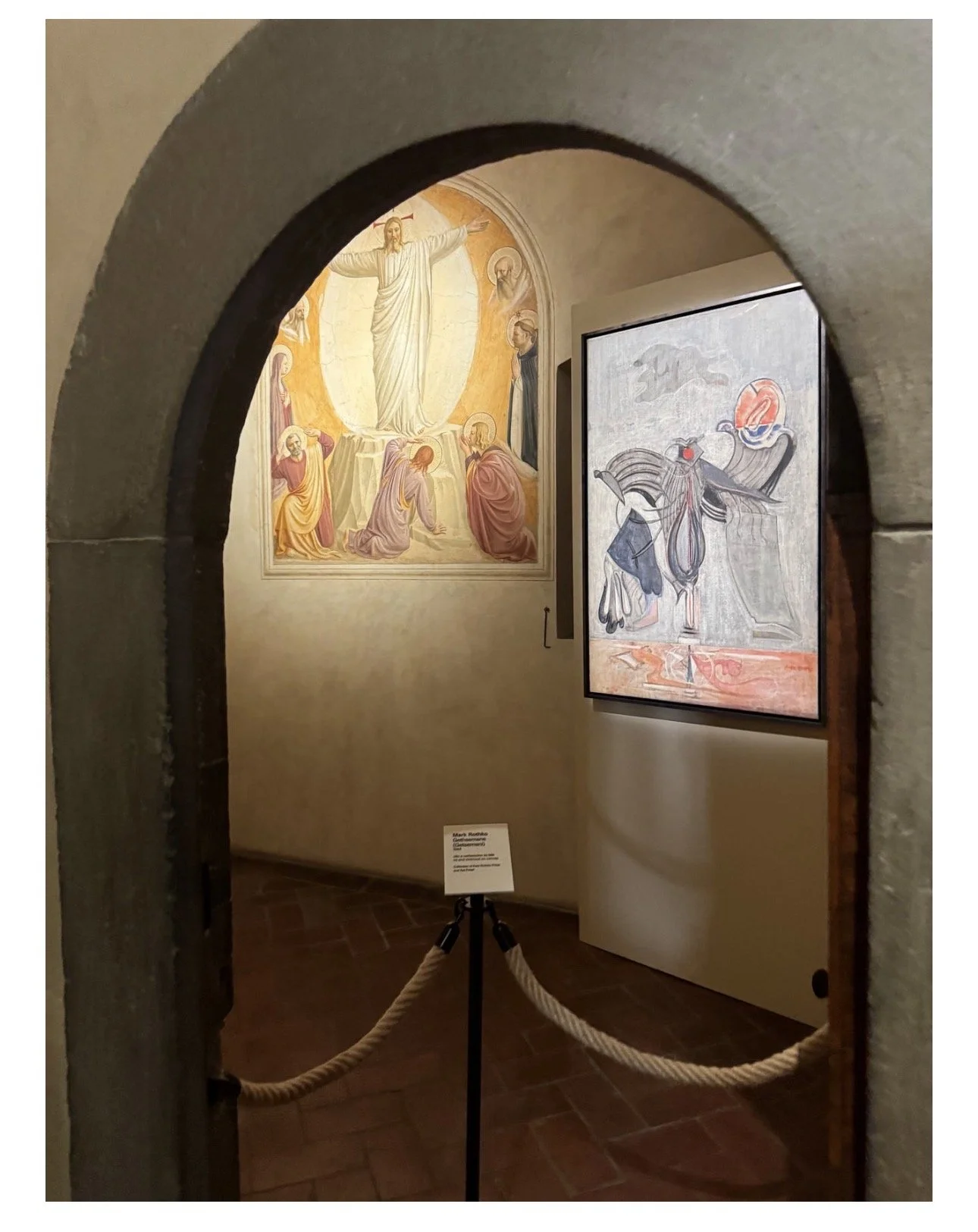
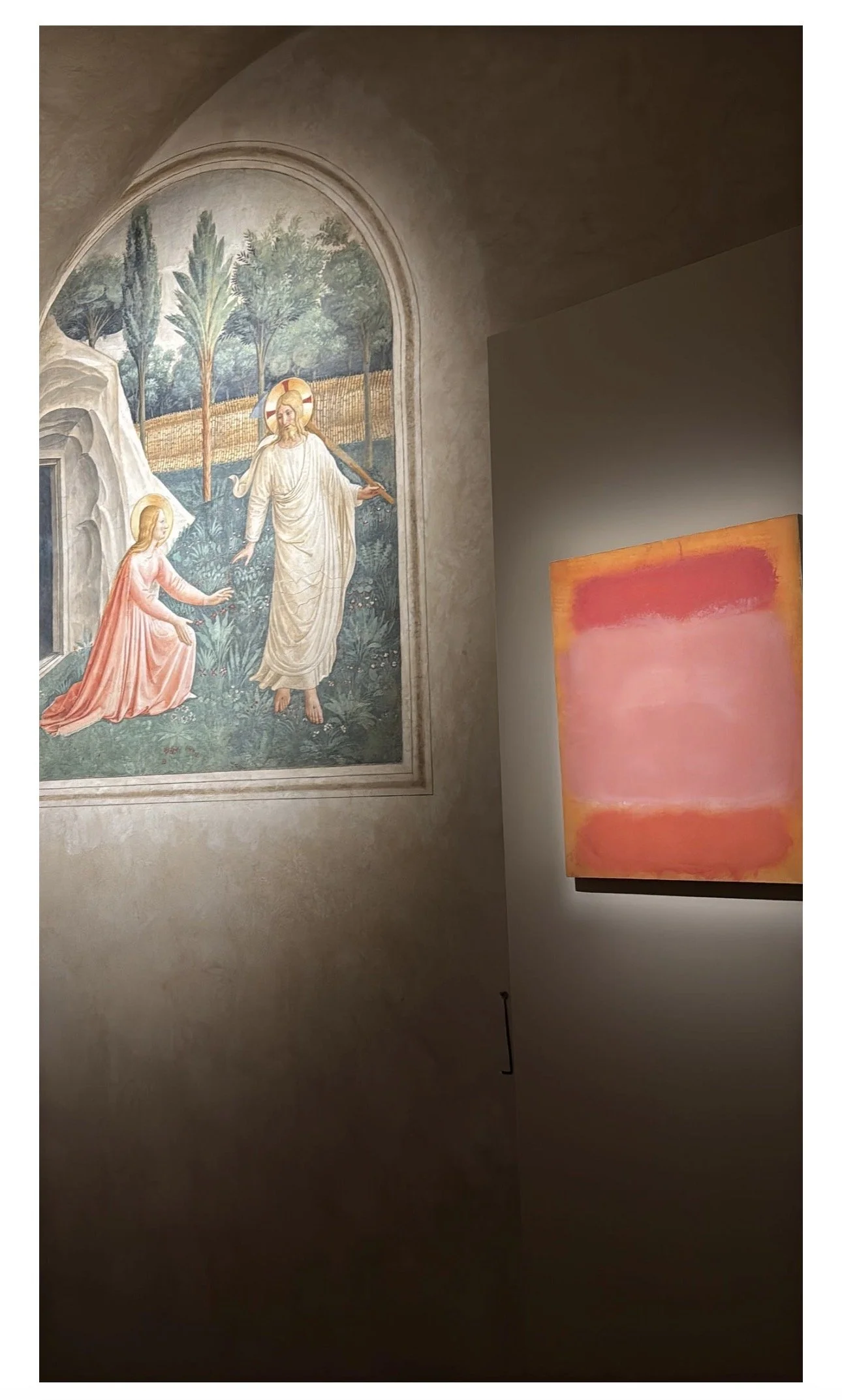
It was the middle of the day when I went to see the exhibition, but it didn’t feel like the middle of the day. It felt like the hour before sunrise, or the hour before bedtime, those liminal slots of time where you slow down. Someone had engineered that.
A curator had made decisions about wattage, film of cover on the windows, wall color and the exact distance between paintings so that my nervous system would feel calm and primed to take in these blocks of color.
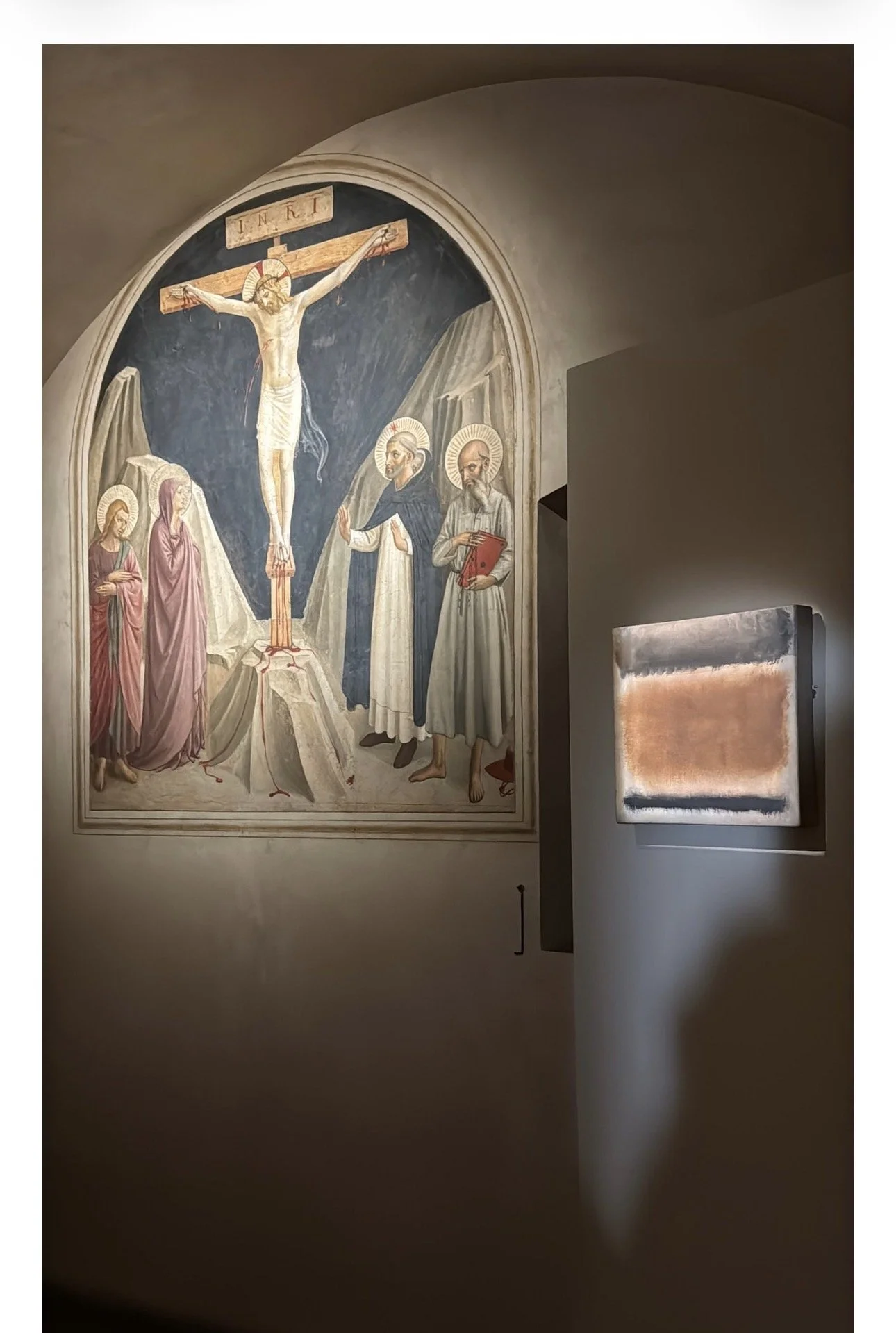
Was I being manipulated? Almost certainly. The reverence I felt was built, on purpose, by someone whose job was to build it. But does knowing that make the feeling any less real? I don’t think it does.
We go to churches, synagogues, mosques and temples built by man and designed intentionally to make us feel something.
Reverence, it turns out, sometimes requires collaboration. A thoughtful curator. Beautiful architecture. Light. Silence. God’s hand, whether that’s through nature or the idea to paint a certain thing that the universe places in an artist’s mind.
Rothko once said, “A painting is not a picture of an experience; it is an experience.”
I thought I needed to research Rothko to explain/study his art. But turns out I just had to be present and notice myself slipping into reverence.
Where have you felt reverence lately? Or seen a piece of art, film, or writing that shifted you into reverence?